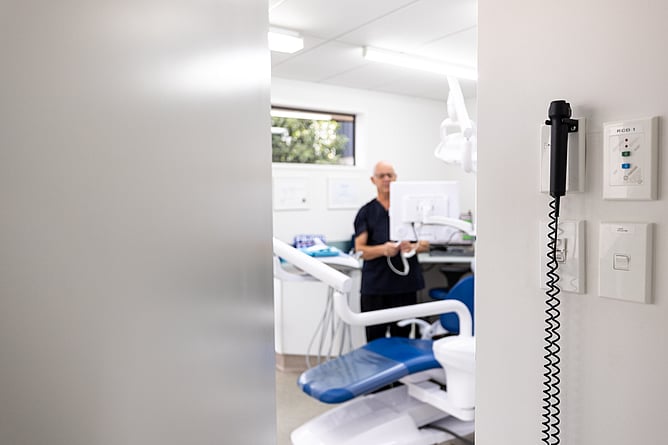
Teeth whitening is one of the most-Googled cosmetic dentistry questions in New Zealand, and one of the most confusing. The supermarket shelf is full of kits. Beauty therapists offer in-chair sessions. Online sellers ship products from overseas. And dentists offer professional whitening that is more expensive than any of those. Which actually works?
The honest answer comes down to two things: the strength of the whitening agent, and who is supervising the process.
What's actually in whitening products?
Almost all teeth whitening uses one of two active ingredients: hydrogen peroxide or carbamide peroxide. Carbamide peroxide breaks down into hydrogen peroxide and urea once applied, so the active component is essentially the same. The difference is concentration.
In New Zealand, products sold directly to consumers are limited by law to a maximum of 0.1% hydrogen peroxide. Dentists, who are trained to assess suitability and supervise the process, can use higher concentrations, typically up to 6% hydrogen peroxide for take-home trays and 35% or higher for in-chair professional whitening.
That difference in concentration is the entire reason supermarket whitening kits often disappoint. They are not strong enough to lift staining the way professional whitening can. They will not damage your teeth, but the result is usually subtle at best.
What about beauty therapists offering whitening?
Beauty therapists in New Zealand can only use the same low-concentration products available to consumers. They cannot legally use the higher-strength gels available to dentists. If you have seen "in-chair whitening" advertised at a beauty salon, the active ingredient is the same as a supermarket kit. The packaging and chair time may suggest something stronger; the chemistry does not.
What dentist whitening actually involves
Professional dentist-led whitening usually takes one of two forms (or a combination):
In-chair professional whitening
A high-concentration gel is applied to your teeth in a single one to two hour session at the practice. Your gums are protected with a barrier, and a curing light may be used to accelerate the process. Results are visible immediately. This is the fastest option but typically the most expensive.
Take-home custom trays
Your dentist takes impressions of your teeth and makes custom-fitted trays. You apply a medium-concentration whitening gel to the trays at home, wear them for a set time each day for one to two weeks, and the result builds up gradually. This is usually less expensive than in-chair and produces a more even result over time.
What you should expect from any whitening (and what is hype)
Realistic expectations matter. A few things that are true:
Whitening lifts surface staining and brightens natural tooth enamel. It will not change the colour of fillings, crowns, veneers, or bonding.
Most patients see a noticeable difference, but not a Hollywood-bright result. Anyone promising you blindingly white teeth in one hour is either using language loosely or doing something risky.
Sensitivity to cold is the most common side effect. It usually settles within a few days. Higher-strength products are more likely to cause it.
Results last between one and three years on average, depending on lifestyle (coffee, tea, red wine, smoking are the main culprits).
Who shouldn't whiten?
Whitening is not right for everyone. Generally not recommended for:
People under 18 (still-developing tooth enamel).
Pregnant or breastfeeding women (out of caution; the long-term effects on a foetus or baby are not fully studied).
People with untreated decay, broken teeth, or active gum disease (whitening can cause significant pain in any of these situations and should be avoided until they are addressed).
People with extensive front-tooth restorations (bonding, veneers, crowns), because whitening will not affect those, leading to mismatched colour.
This is part of why a dentist-led approach is safer: the consultation catches all of these before any whitening is started.
So which should you choose?
Honestly, it depends on what you are after. If you want a noticeable lift in shade and you want it to last, professional whitening (either in-chair or take-home) is the better investment, even though it costs more upfront. If you want subtle freshness and you are aware the result will be modest, an over-the-counter kit will not damage your teeth and may be enough.
What we would not recommend: spending money on multiple over-the-counter products in the hope they add up to a professional result. They generally do not, and you will likely end up at the dentist anyway.
Cambridge Dental offers safe, supervised professional whitening with options to suit your timeline, your sensitivity, and your budget. The first appointment is a calm conversation, not a commitment.